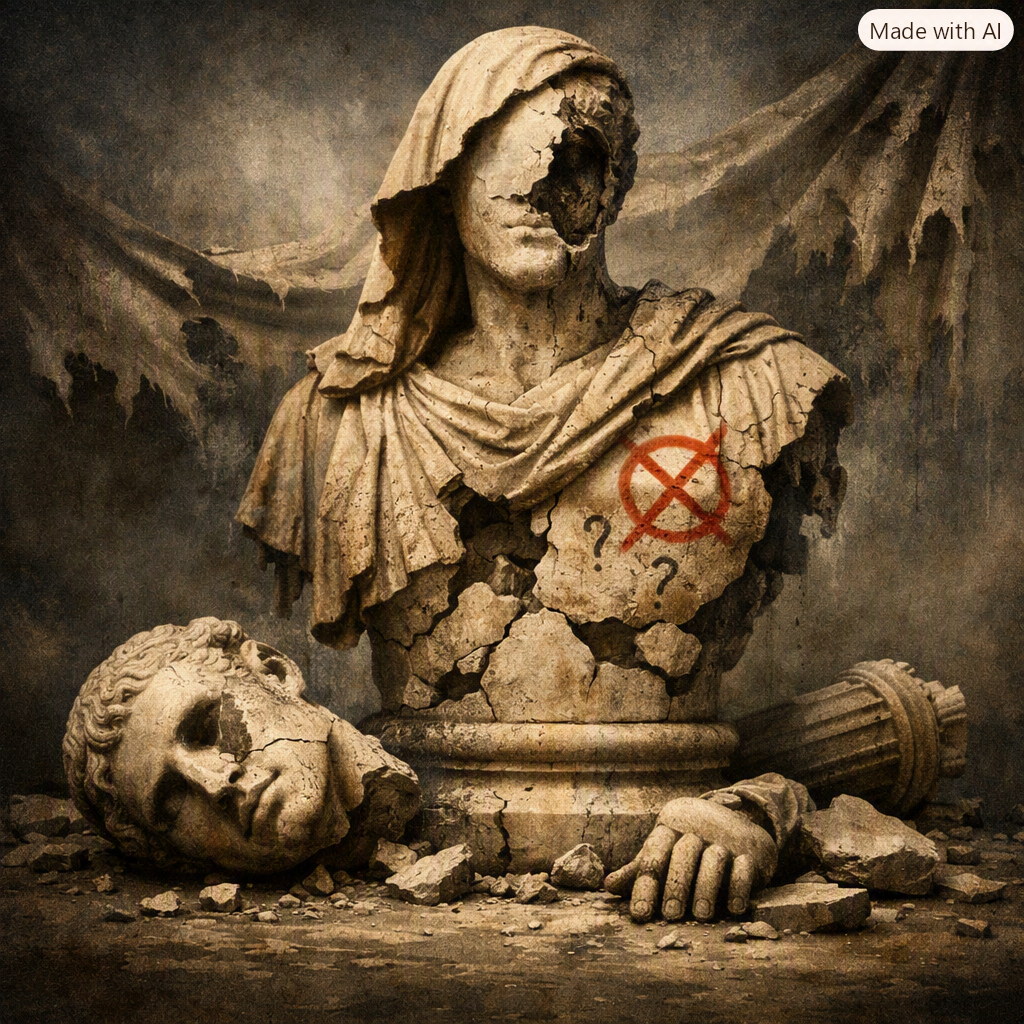
The debates that erupted in 2020 over statues, monuments, and historical memory have not faded—they have simply evolved. What began with the toppling of figures linked to slavery and colonialism has expanded into a broader struggle over who controls the narrative of the past, and by extension, the identity of the present. The term cancel culture still circulates, but its meaning has become even more contested. The question remains: whose culture is actually being cancelled?
The old adage, “History is written by victors,” still explains much of the tension. For centuries, Western accounts have framed “discoveries” by Mungo Park, David Livingstone, Christopher Columbus, and Captain Cook as heroic milestones, despite the presence of indigenous peoples who had lived on those lands for generations. The imbalance of voice persists: the conqueror’s story is amplified; the conquered are footnotes.
But the landscape has shifted. Since 2020, digital platforms have become the new battleground for historical interpretation. Algorithms now determine which narratives gain prominence and which are buried. Viral outrage can elevate a forgotten injustice within hours—or erase nuance just as quickly. The storyteller has changed, but the power struggle remains.
The New Extremes
The polarisation around statues has intensified.
On one side are those who insist that removing monuments is an attack on heritage.
On the other are those who argue that keeping them is an endorsement of oppression.
Both positions often miss the point: context matters.
History should be recorded—not romanticised, sanitised, or weaponised.
Yet societies continue to “hide” certain histories when convenient. There are still no monuments to Hitler, no public grave for Osama bin Laden, and no tolerance for symbols like the swastika, ISIS flags, or KKK insignia. These absences are not seen as “cancelling history,” but as moral clarity. The same logic rarely extends to colonial figures whose legacies are far more complex.
Even in 2026, discussions about the transatlantic slave trade still underplay the role of African intermediaries who captured and sold fellow Africans. This omission persists because it complicates the narrative—yet history is rarely tidy.
The Power of Representation
The question of how we portray historical figures is more urgent than ever.
No individual is flawless, yet monuments often present them as such.
A man on horseback may symbolise triumph to some, but domination to others.
In recent years, artists and historians have begun experimenting with dual‑narrative monuments—installations that acknowledge both achievement and harm. These attempts reflect a growing recognition that history is not a choice between celebration and erasure, but an invitation to wrestle with complexity.
The Digital Storyteller
Since 2020, the influence of media, film, and online culture has only grown.
Stereotypes continue to be reinforced—sometimes subtly, sometimes blatantly.
The black man as threat.
The immigrant as burden.
Africa as perpetual crisis.
Middle America as monolithic and intolerant.
These narratives shape public perception far more than any statue. They influence policy, policing, and personal interactions. They also determine which histories are amplified and which are forgotten.
It is telling that many still do not know that African Americans once made up roughly a quarter of cowboys in the 1800s, or that some of the world’s earliest universities were in Africa. Or that Christianity reached Africa centuries before it reached much of Europe. These facts challenge the dominant cultural script—and that is precisely why they matter.
Learning From the Past Without Distorting It
George Santayana’s warning—“Those who cannot learn from history are doomed to repeat it”—feels even more relevant in 2026. But learning requires accuracy. If the history we preserve is skewed, incomplete, or filtered through the lens of power, then its lessons are compromised.
Statues alone cannot correct historical wrongs. But neither should they reinforce a single, dominant narrative. The goal is not to erase history, but to illuminate it—fully, honestly, and without fear.
So, Whose Culture Is Being Cancelled?
The struggle over monuments is ultimately a struggle over memory, identity, and influence.
It is not simply about the past, but about who gets to define the future.
The real danger is not that history will be cancelled, but that it will continue to be curated by the same narrow perspectives that shaped it for centuries.
And so the question remains—perhaps more urgently than before:
Whose culture is truly being cancelled?
Leave a Reply